
Mining and Quarry Equipment
Excavators, loaders, dump trucks, drilling equipment and support machinery matched to production and haul conditions.
Easysail supports mine operators, contractors, dealers and maintenance teams sourcing Chinese mining equipment, crushing and conveying systems, ground-engaging tools, liners, buckets, filters, hydraulic parts and recurring replacement items.
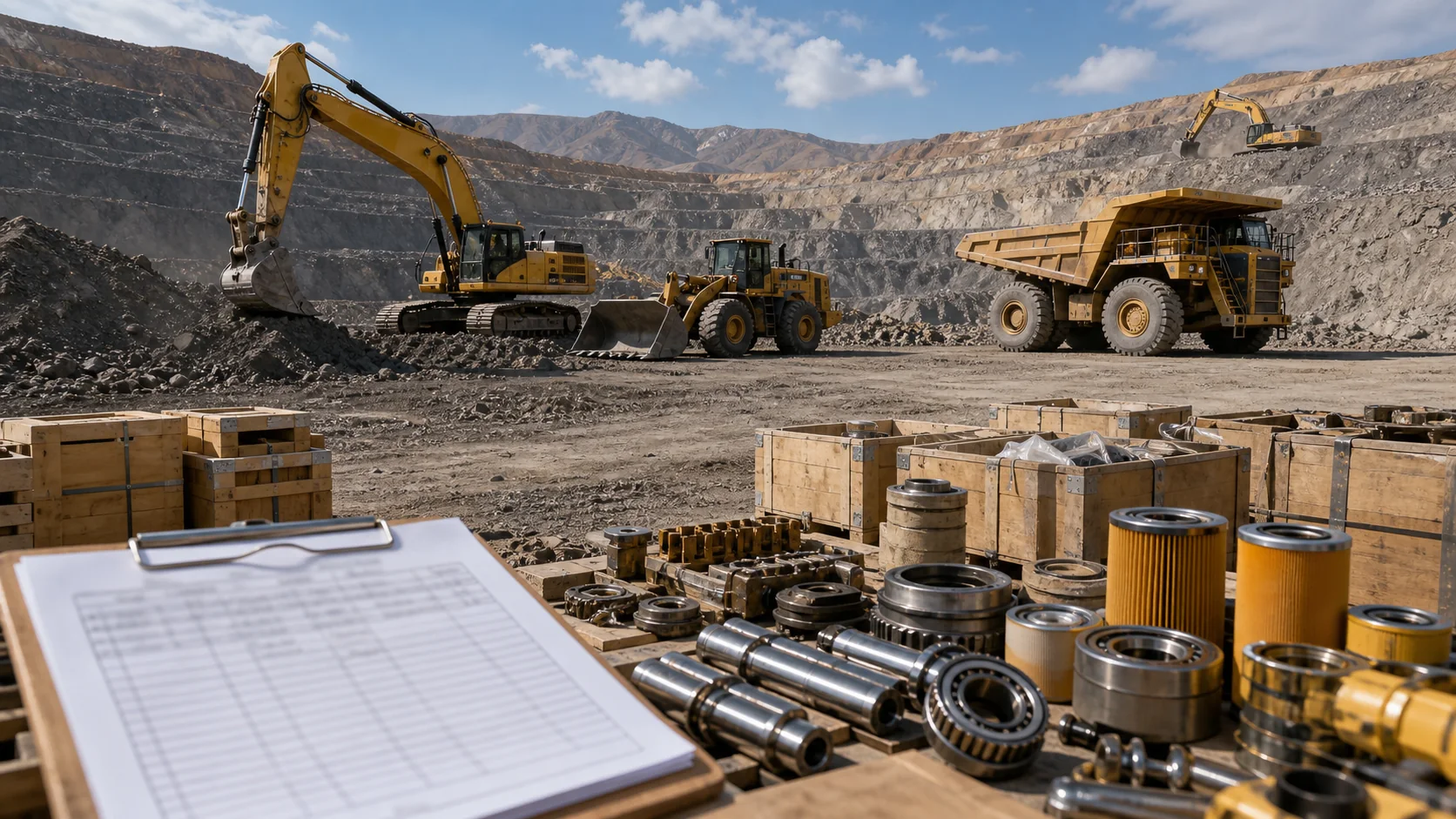
Mining components may look interchangeable while differing in alloy, heat treatment, hardness profile, casting quality, machining tolerance, welding process or dimensional control. A wrong replacement can stop equipment, shorten service life or damage connected components.
We organize parts by equipment identity and working duty, normalize supplier quotations, coordinate drawings or samples, verify relevant production processes, define inspection evidence and build a repeat-order record for high-consumption items.
The product list can cover complete systems, machine-specific components and recurring maintenance stock.
Excavators, loaders, dump trucks, drilling equipment and support machinery matched to production and haul conditions.
Crushers, screens, feeders, conveyors, motors, bearings and plant modules coordinated around material and throughput.
Bucket teeth, adapters, cutting edges, liners, mantles, concaves, jaw plates and abrasion-resistant components.
Filters, seals, hydraulic parts, undercarriage, bearings, electrical parts and recommended stock for repeat replenishment.
Supplier comparison should start with equipment identity, dimensions, material and working conditions.
Use the product's real technical and logistics constraints to define supplier comparison and inspection.
The aim is to reduce ambiguity on the first order and make repeat replenishment easier to control.
Connect each item to equipment, part number, drawing, dimensions, sample and working duty.
Normalize material, process, tolerance, inspection evidence, packing, price, lead time and minimum order.
Confirm sample or drawing revision, critical dimensions, material evidence, marking and acceptance method.
Maintain approved records, inspection history, consumption priority and replenishment status for future orders.
A practical program separates high-consumption wear items from critical low-frequency spares, then aligns supplier lead times and stock decisions with the mine's maintenance plan.
Yes. Large lists should first be cleaned and grouped by equipment, part number, technical evidence, urgency and supplier category before quotations are compared.
Often yes, depending on the part and intellectual-property rights. Drawing revision, dimensions, material, process and sample-return arrangements should be documented before production.
Yes. Repeat programs benefit from an approved-item record, consumption priorities, supplier lead-time tracking, inspection history and consolidation planning.
Include product references, specifications, quantity, destination country, target schedule and budget range. We will identify the supplier, verification and execution work required in China.